
How Much Does a BTO Renovation Cost in Singapore in 2026?
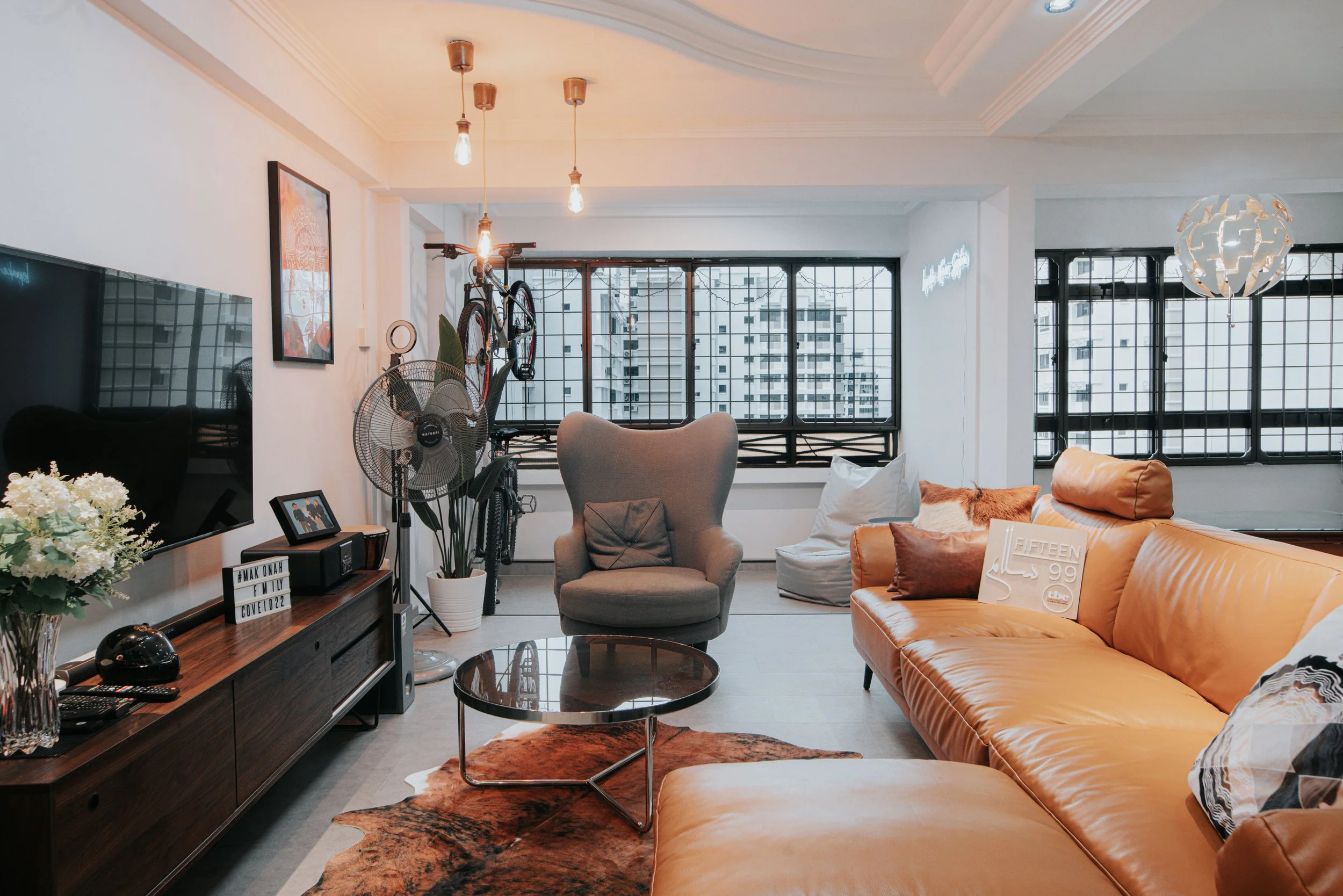
“Your no-fluff, numbers-first guide to BTO renovation costs, timelines, and avoiding the dreaded budget blowout.”
So, You've Got Your BTO Keys. Now What?
Congratulations! You've survived the BTO queue, the ballot, the seemingly endless wait—and now you're holding those shiny keys in your hand. Feels amazing, doesn't it?
Then someone mentions renovation, and suddenly the room spins a little.
Between ID firm quotes, WhatsApp groups overflowing with tile samples, and your mum insisting the kitchen must have a feature wall, it's easy to feel completely lost. Especially when you have no idea whether $50,000 is a perfectly reasonable budget or a sign you've been horribly fleeced.
This guide is here to fix that. We're going to walk through exactly what BTO renovation costs look like in Singapore in 2026—real numbers, honest breakdowns, and enough practical advice to make your renovation journey a whole lot less terrifying. (And maybe even a little fun.)
How Much Does a BTO Renovation Really Cost in 2026?
Let's start with the headline numbers, because that's what you're really here for. Based on the latest 2026 market data from Qanvast, here's what Singapore homeowners are spending on BTO renovations right now:
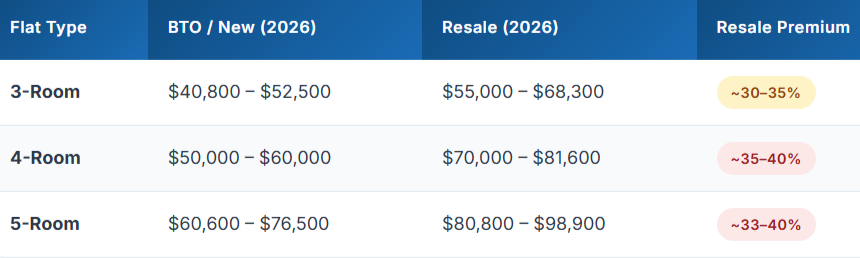
A few things worth noting here. These figures cover a moderate renovation scope—think kitchen carpentry, built-in wardrobes, new flooring, and a fresh coat of paint. They don't include loose furniture, appliances, curtains, or that stunning pendant lamp you've been eyeing on Shopee.
Also notice that resale flats come with a significant premium. We'll get into exactly why in the next section, but the short version is: older flats require a lot more work before you can even start on the fun stuff.
If you're a first-time homeowner and your 4-room BTO budget is somewhere in the $50,000 to $60,000 range, you're right in the sweet spot for a solid, well-finished home. Not bare-bones, not Crazy Rich Asians. Just a really lovely, liveable space.
BTO vs Resale: Why Your Neighbour Paid 30–40% More
You might have friends with similarly-sized flats who somehow spent $80,000+ on renovation while you're budgeting $55,000. This is not because they have terrible negotiation skills (well, maybe a little). It's because resale flats are a fundamentally different beast.
Resale renovations typically cost 30–40% more than BTO renovations of the same flat type. Here's why:
• Hacking and demolition: Resale flats have existing tiles, fittings, and finishes that need to be torn out before anything new can go in. This costs both money and time.
• Full rewiring and re-plumbing: Older electrical systems often need a complete overhaul to meet modern safety standards. Plumbing may need rerouting or replacement.
• Waterproofing repairs: Bathrooms in older flats frequently have waterproofing issues that need to be fixed before you can tile over them.
• Rectification works: Pre-existing damage—cracks, water stains, mould—all needs to be addressed. You're not starting from a blank canvas; you're fixing someone else's canvas first.
With a BTO flat, you're working with a brand-new unit. The tiles may not be your dream tiles, but the waterproofing is fresh, the wiring is up to code, and you're not discovering any nasty surprises behind the walls.
This is why BTO renovation is almost always more cost-effective—you're paying for what you want, not for what needs fixing.
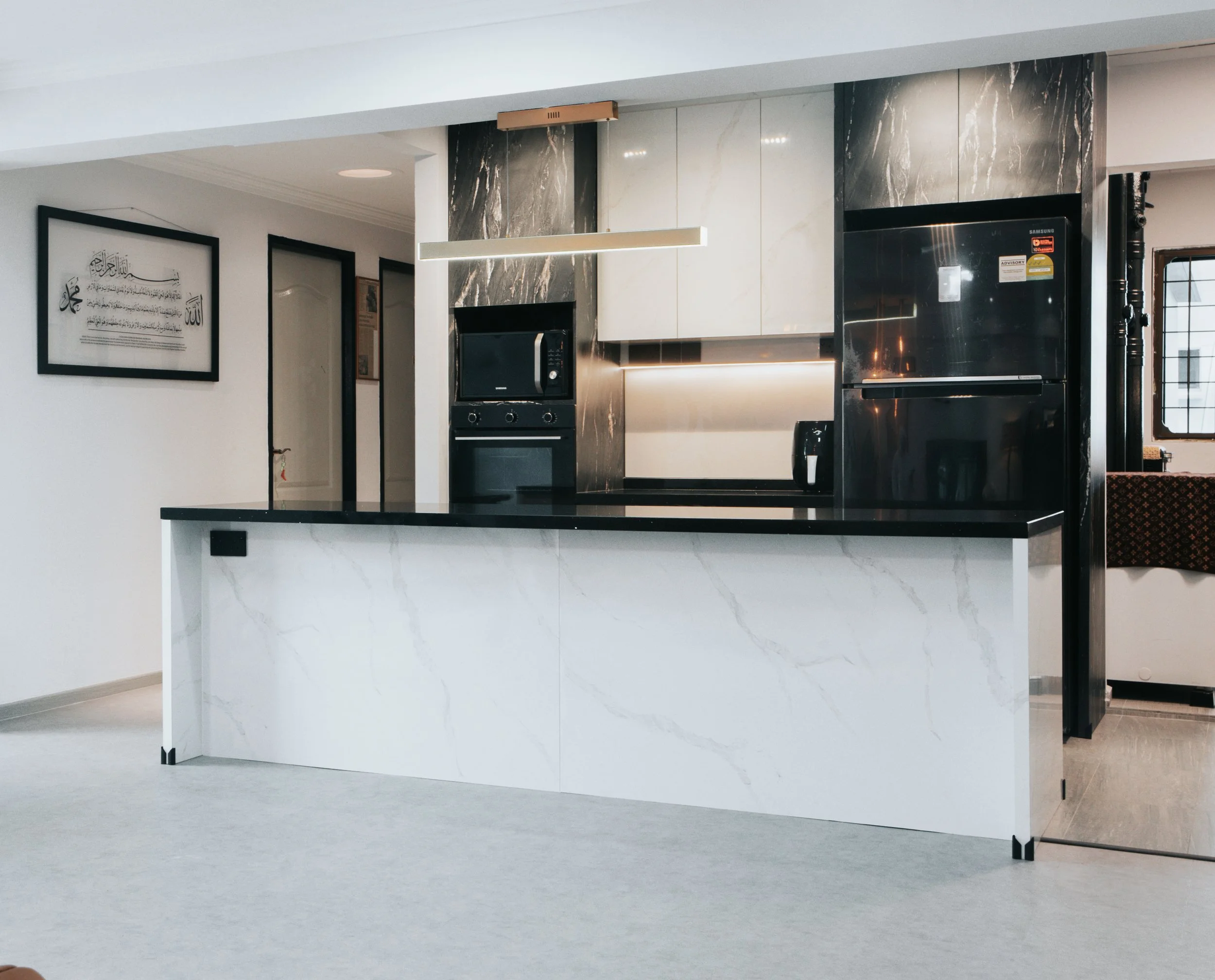
(Bukit Batok St 24 Kitchen Renovation)
What's Your Renovation Scope? Light, Standard, or Extensive?
Here's a question that confuses almost every first-time homeowner: why can two 4-room BTO flats have renovation quotes that differ by $30,000?
The answer is scope. Renovation isn't one-size-fits-all. The scope of your project—how much you change, how high-end your materials are, how much custom carpentry you commission—determines the final number more than almost anything else.
Here's how we typically think about the three main tiers for a 4-room BTO flat:
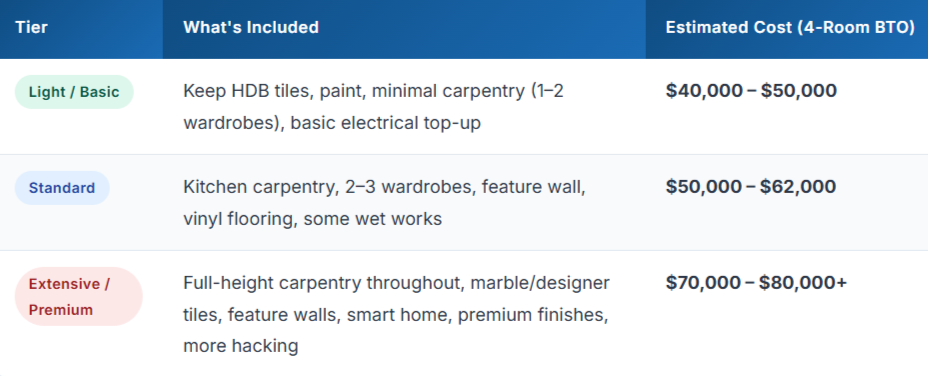
Most first-time BTO homeowners land somewhere in the standard tier. It's the sweet spot between 'I kept the HDB tiles and feel vaguely sad about it' and 'I installed marble floors and now I'm eating instant noodles for a year.'
The extensive tier is absolutely achievable—and can result in absolutely stunning homes—but it requires a correspondingly extensive budget. There's nothing wrong with it, as long as you've done your sums honestly and you're not financing a marble feature wall on your credit card.
What's Inside That Quote: A Room-by-Room Breakdown
Ever received a renovation quote and wondered what all those line items actually mean? You're not alone. Let's break down what a typical moderate renovation for a 4-room BTO actually looks like, category by category.
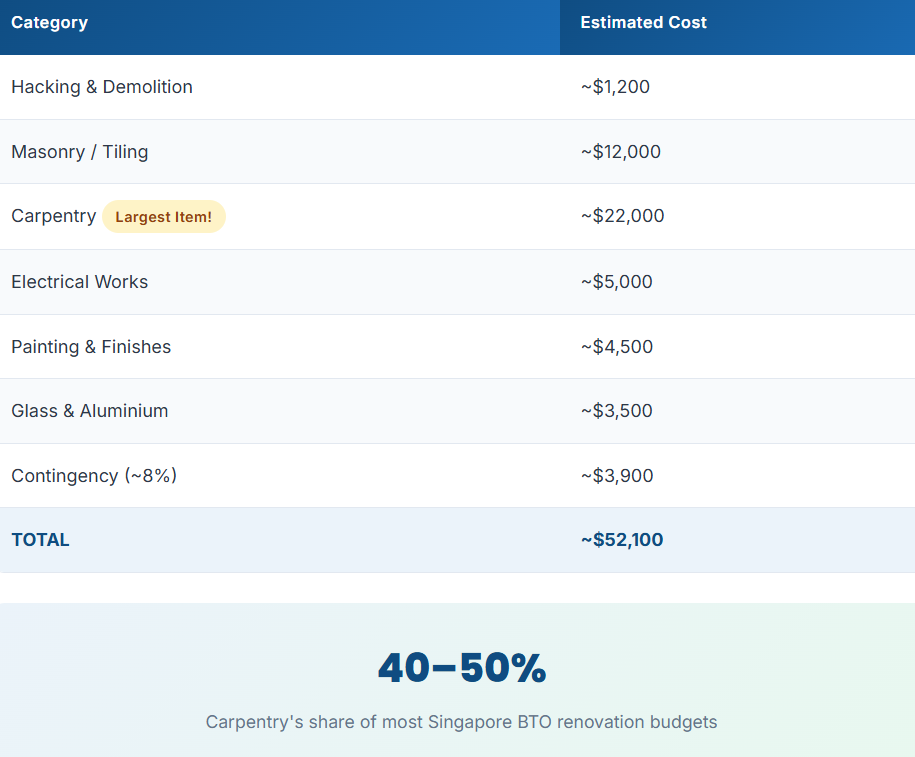
Notice something? Carpentry is doing a lot of heavy lifting. For most Singapore homes, it accounts for 40–50% of the total renovation budget—and for good reason. Your kitchen cabinets, wardrobes, TV console, shoe cabinet, and any built-in shelving all fall under this category.
This is why the quality and experience of your carpenter matters so much. It's also why you should be skeptical of quotes that seem suspiciously cheap on the carpentry line—you may be getting exactly what you paid for.
A Note on Plumbing
You'll notice plumbing isn't explicitly listed in the example above—that's because for a standard BTO renovation, plumbing changes are often minimal. You might add a water point for your washing machine or shift a tap, but major plumbing work (like relocating your bathroom) is both expensive and subject to HDB approval. Keep it simple where you can.
Unit Rates Cheat Sheet: How to Read Every Line in Your Quote
One of the most valuable things you can do when reviewing renovation quotes is to sanity-check individual line items. Here's a quick reference guide for common unit rates in Singapore's 2025–2026 market:
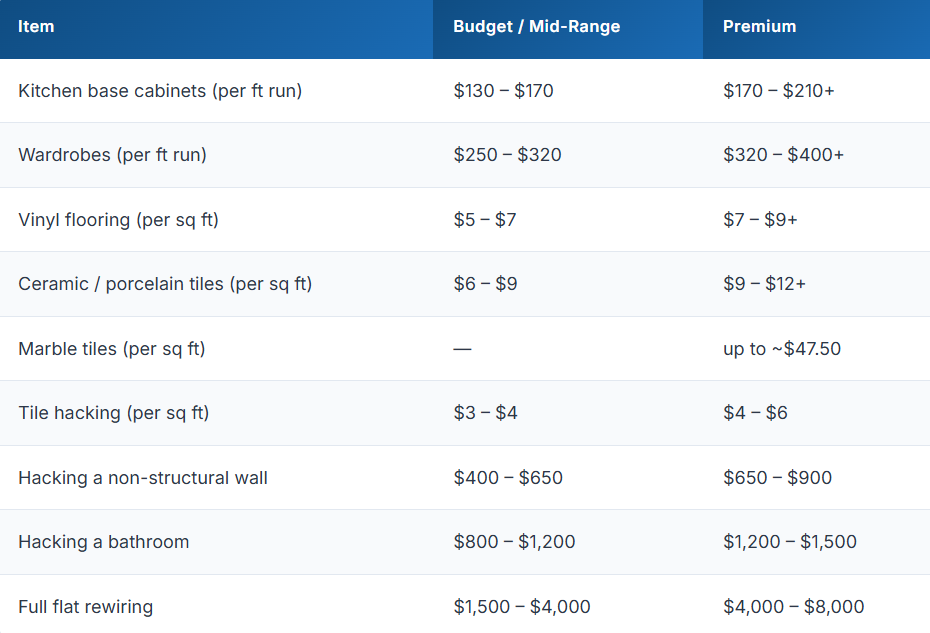
Use this table as a guide, not gospel. Prices vary based on the complexity of the design, accessibility of the space, and the firm you're working with. A slightly higher rate from an experienced, reputable contractor is often worth it compared to a suspiciously low rate from someone with three reviews on Google
If a single item looks wildly out of range—in either direction—ask for clarification. Good firms welcome questions. It's the ones who get cagey about their pricing that should make you nervous.
Are Renovation Prices Still Rising? Trends from 2023 to 2026
The short answer: prices have been climbing, but seem to be stabilising. Here's how 4-room BTO renovation costs have moved over the past few years:
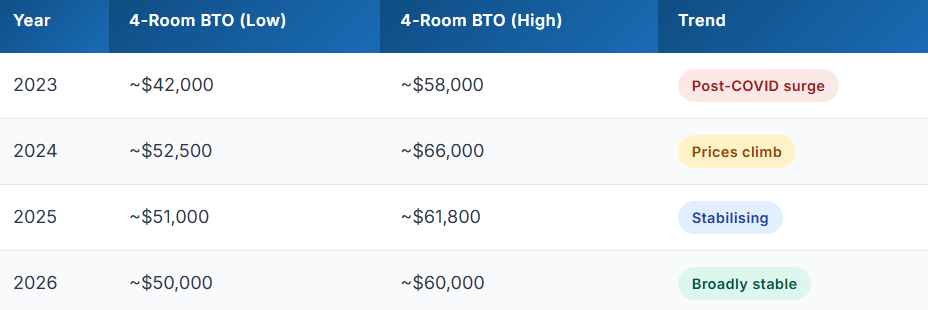
After the sharp post-COVID inflation of 2022–2023 (driven by supply chain disruptions, soaring material costs, and a labour squeeze), renovation prices climbed significantly into 2024. The good news is that 2025 and 2026 data from Qanvast suggests we're entering a period of relative stabilisation for 4-room and 5-room BTOs.
Interestingly, 3-room flats have seen slightly more noticeable price increases—partly because the base costs (labour, materials) can't be spread across as much carpentry, making the per-unit-area cost higher proportionally.
One trend driving cost management: more homeowners are choosing vinyl flooring over ceramic tiles, and keeping HDB's basic finishes where possible, to keep budgets in check without compromising on the parts of the home that really matter.
ID Firm or Contractor? The Real Cost Difference
Here's a conversation that happens a lot: 'My friend hired just a contractor and paid $15,000 less than me. Did I get ripped off?'
Not necessarily. But it's worth understanding what you're actually paying for.
Hiring a Contractor
Working directly with a contractor (or managing separate trades yourself) can absolutely be more affordable. You're removing the ID's design fee and project management markup from the equation. The trade-off? You're responsible for coordinating everything—the tiler, the electrician, the carpenter, the painter. You're making design decisions without professional guidance, and if something goes wrong, you're the one chasing it up.
This works well for experienced renovators or those with relatively simple, straightforward requirements. For first-timers with complex designs and limited time? It's often a false economy.
Hiring an Interior Designer
An ID brings design expertise, project management, HDB permit knowledge, and accountability. They're responsible for ensuring your vision translates into a coherent, well-executed home. They handle the back-and-forth with HDB, coordinate trades, and manage defect rectification.
Yes, this costs more overall. But for most first-time BTO homeowners, the combination of a clearer design outcome, reduced stress, and professional accountability is well worth the premium.
The Smart Middle Ground
Many experienced homeowners strike a balance: engage an ID for the overall layout concept, key carpentry design, and HDB permit applications, but keep the scope focused. A 4-room BTO targeting $50,000–$60,000 all-in with a reputable ID is very achievable—it just requires being disciplined about not adding to the scope every week.
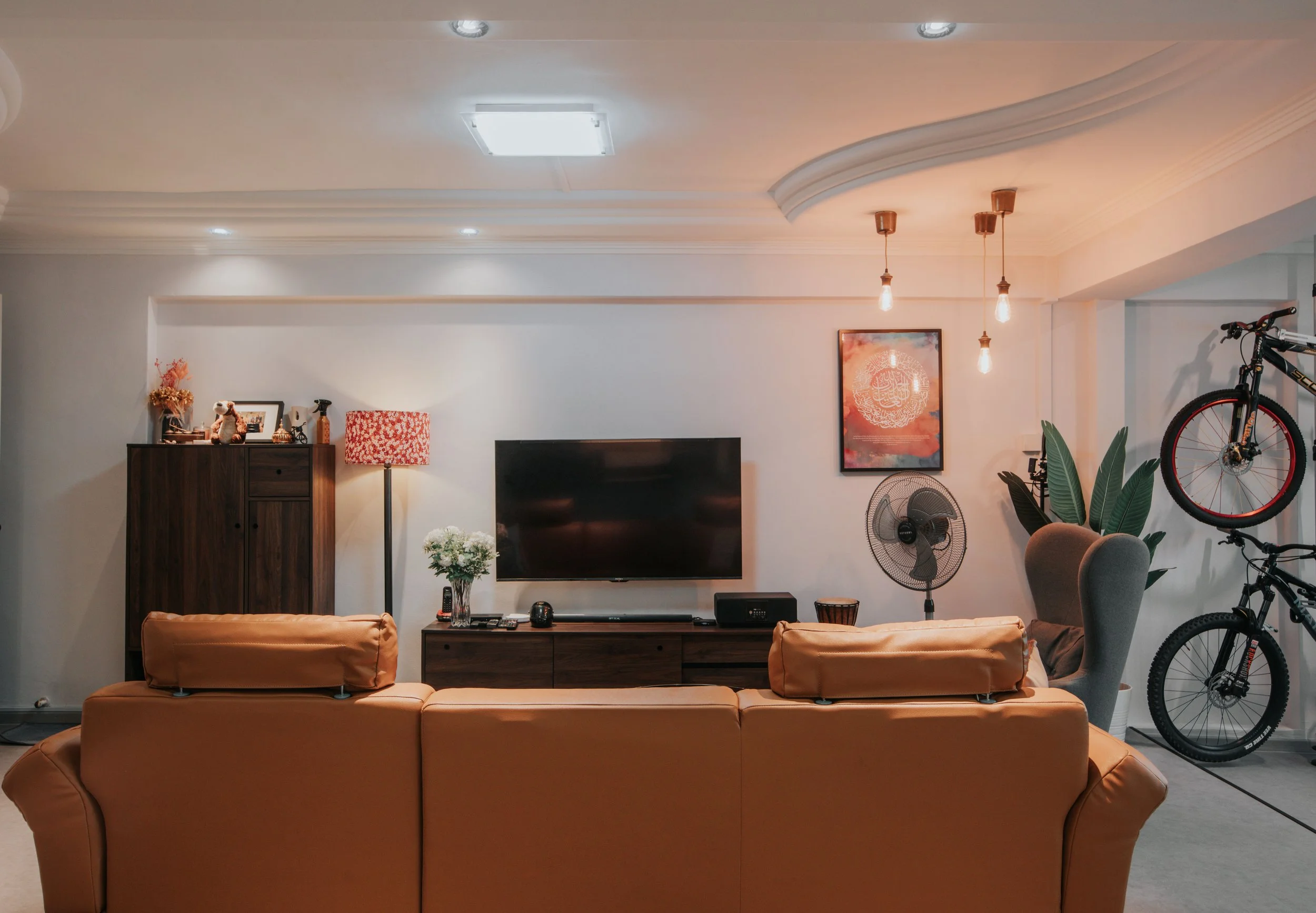
(Bukit Batok St 24 Living Room Renovation)
Financing Your BTO Renovation: What You Need to Know
Before you sign any contracts, it's worth thinking about how you'll actually pay for all of this.
Renovation Loans vs Personal Loans
Renovation loans are specifically designed for this purpose, typically offer lower interest rates than personal loans, and are offered by most major Singapore banks. The catch? They can only be used for actual renovation works—not furniture, appliances, or soft furnishings. If you want to finance your sofa through the same loan, you'll need a personal loan instead.
Renovation loans are typically capped at $30,000 or six times your monthly salary (whichever is lower). If your renovation budget exceeds this, you'll need to plan for a combination of cash savings and loan financing.
Payment Milestones
Most reputable ID firms structure payments in progressive milestones rather than demanding a large upfront sum. A typical structure looks something like this:
• 10–20% deposit upon contract signing
• 30% upon commencement of works
• 30% upon carpentry installation or a defined milestone
• Balance (20–30%) upon handover and defect rectification
Be very wary of firms asking for more than 20–25% upfront. CaseTrust-accredited firms cap renovation deposits at 20% for a reason—it protects homeowners from overcommitting before the work is done.
HDB Compliance Costs
Don't forget to budget for the 'invisible' compliance costs. HDB renovation permits aren't free, and debris haulage fees can add several hundred dollars to your total. Factor these in early so they don't become an unpleasant surprise at the end.
The Hidden Costs No One Tells You About
Every first-time renovator has a moment about three-quarters through the process where they look at their spreadsheet and think: 'Where did all this come from?' Here's your advance warning of the items that reliably don't make it into initial quote discussions:
• Appliances: Fridge, washing machine, hob and hood, oven, dishwasher—these can easily add $5,000–$15,000 to your total spend depending on brands and specifications.
• Sanitary fittings: That gorgeous rain shower and vessel sink in your Pinterest board? Not included in most renovation quotes. Budget separately.
• Light fixtures and ceiling fans: Standard quotes often include light points but not the actual fixtures. A well-lit home with quality lighting can cost $1,500–$3,000 for fixtures alone.
• Curtains and blinds: Routinely forgotten, routinely expensive. Motorised blinds for a 4-room flat can run $2,000–$5,000.
• Loose furniture: Your sofa, dining table, bed frames, and coffee table are all separate from your renovation. Budget at least $5,000–$15,000 here depending on your taste.
• Post-renovation cleaning: Professional cleaning after a renovation typically costs $276–$600 depending on unit size. This is not optional—construction dust gets absolutely everywhere.
• Town council protection requirements: Lift padding, corridor protection boards, and cleaning deposits are typically required by the management office and can run a few hundred dollars.
Add all this up for a 4-room BTO and you're easily looking at an additional $15,000–$30,000 on top of your renovation quote. Build this into your planning from day one.

(Always factor in additional hidden cost)
The Bottom Line
Renovating a BTO flat in Singapore in 2026 costs—for a 4-room flat, in the ballpark of $50,000 to $60,000 for a well-executed standard renovation. More if you want premium finishes and full custom carpentry throughout. Less if you're happy keeping HDB tiles and going minimal on the built-ins.
The most important thing you can do right now is get honest about your total budget (renovation plus everything else), define your scope clearly, and find a contractor or ID firm whose work you admire and whose communication style you trust.
Your BTO home is a long-term investment in your daily quality of life. Spend thoughtfully, plan carefully, and don't forget to enjoy the process. Even the overwhelming parts have a way of becoming great stories later.
Ready to start planning your BTO renovation?
We'd love to hear about your new home and what you're imagining for it. Get in touch with our team for a no-pressure consultation—we'll help you figure out what's possible within your budget, and what to prioritise to make your home genuinely beautiful.
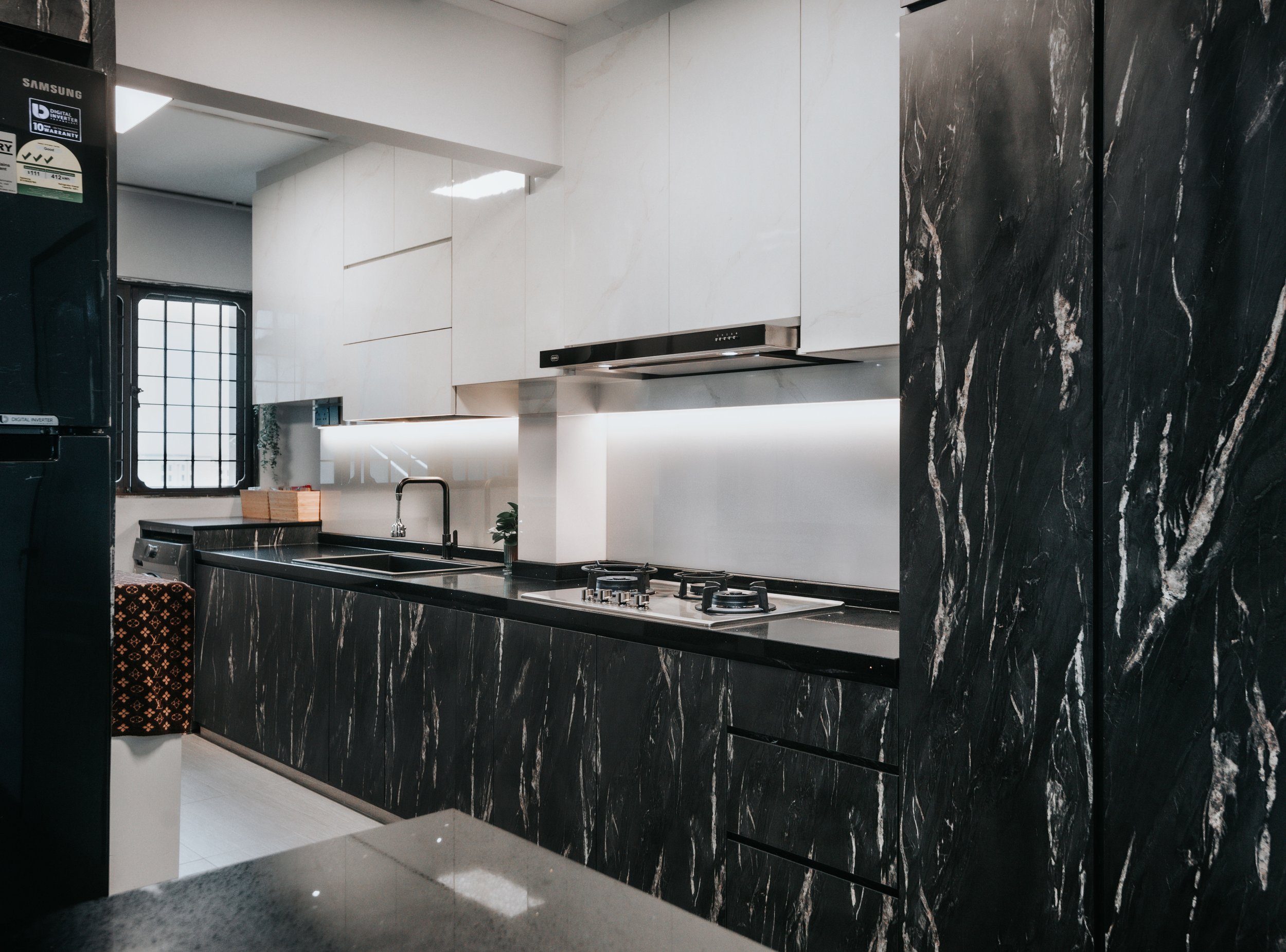
(Bukit Batok St 24 Kitchen Renovation)
