
What Is Japandi Interior Design?
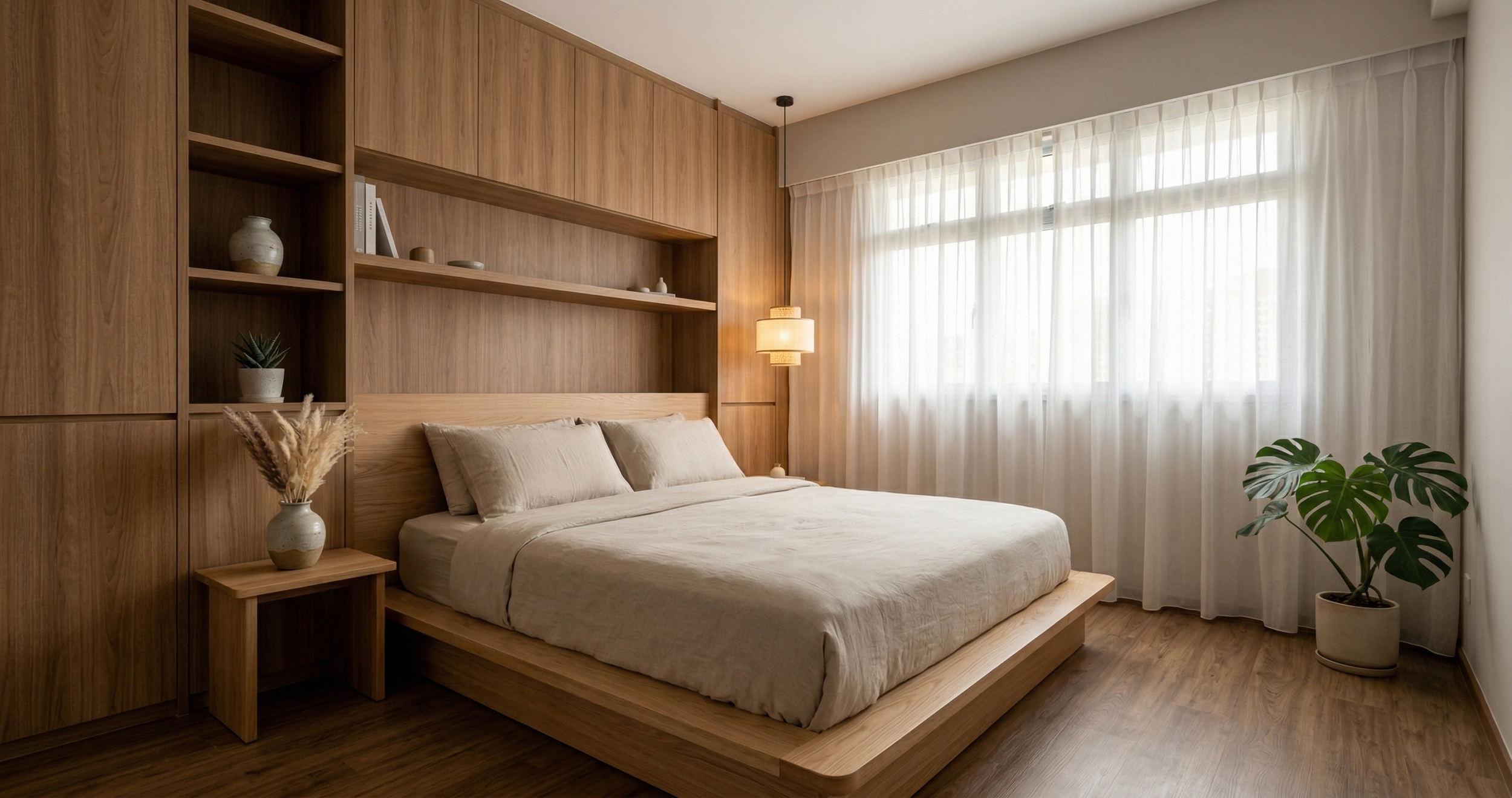
Serene Japandi bedroom with low platform bed, warm wood tones, neutral colors, minimal furniture, natural light
So, What Exactly Is Japandi?
Admit it. You've scrolled through Pinterest at 11pm, stumbled upon a bedroom so impossibly calm and beautiful that it made you feel slightly embarrassed about your own chaotic living situation. Warm wood. A single ceramic vase. Clean lines. Not a rogue charging cable in sight. That, dear reader, was almost certainly Japandi.
Japandi is one of the most searched interior design styles in Singapore right now — and for very good reason. It's the design equivalent of a deep breath: intentional, serene, and quietly stunning. But what is it, exactly? Where did it come from? And most importantly, can you actually pull it off in your HDB flat or condo without it looking like a furniture showroom?
Buckle up. We're about to break it all down for you.
Definition & Origin: Where East Meets North
The name 'Japandi' is a portmanteau — a very fancy word for 'we mashed two words together' — combining Japan and Scandi (short for Scandinavian). At its core, Japandi is a hybrid interior design style that blends Japanese minimalism with Scandinavian functionality.
The style began quietly emerging in the early 2000s but gained serious mainstream momentum in the late 2010s, quickly becoming one of the most sought-after design aesthetics globally. And it's not hard to see why — especially in a city like Singapore, where square footage is precious and the pace of life is... let's say 'vigorous'.
Here's the fascinating part: Japandi draws from two foundational philosophies rooted in cultures thousands of miles apart.
- Japan's wabi-sabi — the art of finding beauty in imperfection, rawness, and the natural passage of time
- Scandinavia's hygge — a spirit of warmth, cosiness, comfort, and quiet contentment
And yet, despite the geographical distance, both traditions arrived at remarkably similar conclusions: a deep love for simplicity, natural materials, and purposeful living. It's like they were always meant to meet. The universe had a mood board.
"Both Japanese and Scandinavian design traditions share a reverence for natural materials, skilled craftsmanship, and the belief that a home should serve as a peaceful retreat from the outside world. Japandi simply brings these two kindred spirits together."
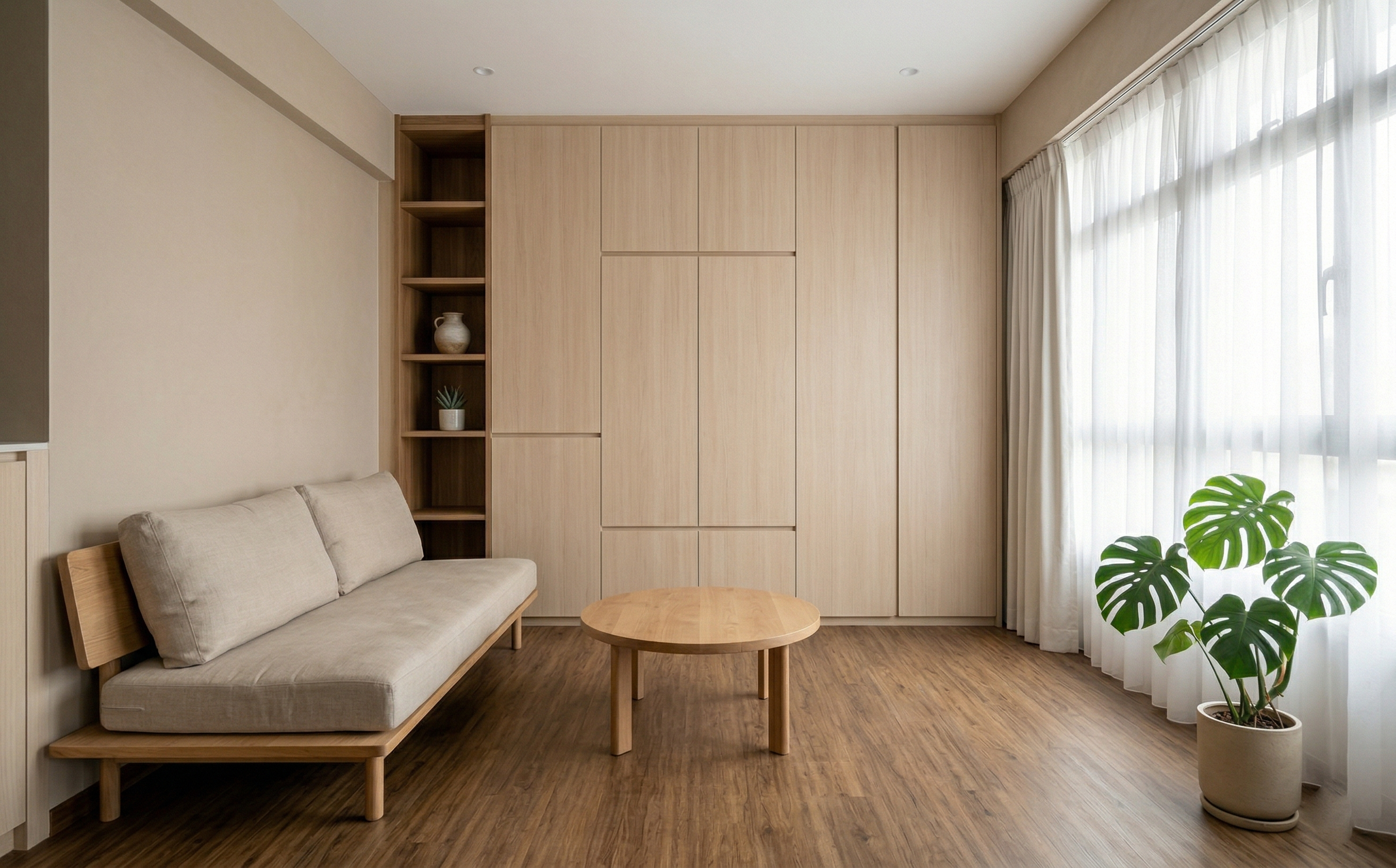
Compact 3-room HDB living room that feels spacious with built-in storage, minimal furniture, warm wood, natural light
Core Philosophy: Why Every Object Must Earn Its Place
At its heart, Japandi is built on one powerful idea: less is more. Every single object in a Japandi space must earn its place. There is no room for clutter, meaningless decorative excess, or that fourth decorative cushion you bought but honestly never needed.
Two key concepts anchor the entire Japandi philosophy:
The Concept of "Ma" (間) — The Power of Negative Space
"Ma" is a Japanese concept that roughly translates to 'negative space' or 'pause'. In design terms, it refers to the deliberate use of empty space between objects. Rather than filling every surface and corner, Japandi celebrates what is left out. The space between things creates openness, calm, and breathing room — allowing each element to be fully seen and appreciated.
Think of it as the design equivalent of a perfectly placed pause in a conversation. Impactful precisely because of what isn't there.
Warmth, Intention, and Mindful Living
Japandi is emphatically not about creating cold, sterile environments. This is a common misconception. A Japandi space is warm, grounded, and deeply intentional. It encourages mindful living — slowing down, appreciating simplicity, and reconnecting with natural materials and surroundings.
In the context of Singapore home renovation, this translates beautifully. After a long day navigating the MRT in peak hour, there is something genuinely restorative about returning to a home that feels quiet, ordered, and calm. Japandi is basically the interior design equivalent of a meditation session. Minus the awkward sitting position.
Key Design Elements: The Building Blocks of Japandi
So what does a Japandi interior actually look like? Here are the six essential design pillars to know.
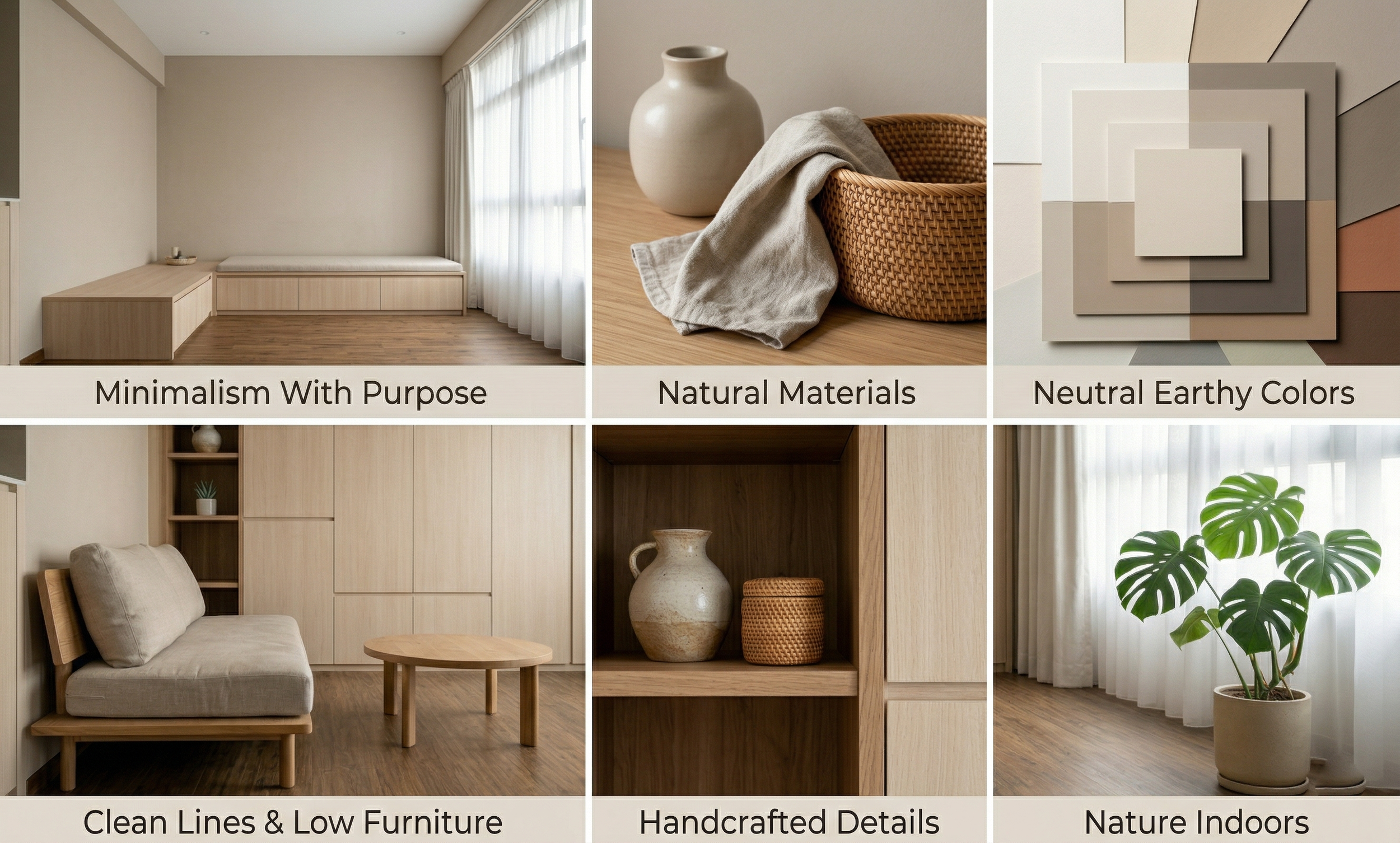
6-panel grid showing: Minimalism, Natural Materials, Color Palette, Clean Lines, Handcrafted Details, Nature Indoors
1. Minimalism With Purpose
Japandi spaces are free from unnecessary embellishments. Every piece of furniture and every decorative item is chosen for both form and function. Multifunctional furniture is actively favoured — especially practical for compact Singapore homes like HDB flats and condos, where every square metre counts.
This doesn't mean bare and boring. It means curated and considered. A built-in storage bench that also serves as seating. A coffee table with hidden compartments. A wardrobe designed to disappear into the wall. You get the idea.
2. Natural Materials
This is where Japandi gets truly tactile. The backbone of any Japandi interior is its material palette: wood (ash, oak, maple), bamboo, stone, rattan, linen, and ceramic. Materials are kept looking natural — no high-gloss finishes here. The grain, texture, and even the imperfections of raw materials are celebrated, not hidden.
Mixing textures is encouraged and actually essential. Think smooth ceramics paired with rough linen cushions and a woven rattan tray. Each texture adds sensory depth and warmth without adding visual clutter. The result is a space that looks beautiful and feels even better.
3. Neutral & Earthy Colour Palette
Japandi's core colour palette is inspired by nature itself: warm whites, sandy beiges, mushroom grey, taupe, and earthy browns drawn from wood, clay, stone, and linen. It is grounded and warm without being dark.
Accent colours include muted greens (olive, sage, forest), soft charcoal, and smoky blues — used sparingly and with intention. Bright, saturated colours and high-contrast hues are deliberately avoided to preserve that calm, meditative quality. No neon feature walls. We mean it.
4. Clean Lines & Furniture Profile
Japandi furniture features clean, simple silhouettes with low-rise profiles — a nod to Japan's floor-sitting culture that also makes rooms feel larger and more open. Think platform beds, low sofas, and furniture that sits close to the ground.
That said, organic curves and softer silhouettes are also welcome in Japandi interiors. The key is to prevent spaces from feeling overly rigid or geometric. A slight curve on a chair leg or a rounded coffee table edge goes a long way toward softening a room.
5. Handcrafted & Artisan Details
One of the most charming aspects of Japandi is its celebration of imperfection. Handmade ceramics with uneven glazing, woven baskets, furniture with visible joinery — these details signal genuine craftsmanship and a human touch. They are the antidote to mass-produced sameness.
These imperfections are entirely intentional. They embody wabi-sabi and prevent the style from tipping into sterile showroom territory. A slightly lopsided handmade bowl on a shelf is not a mistake. It is the whole point.
6. Nature Brought Indoors
Plants, stones, dried botanicals, and natural elements are brought inside to reinforce the connection to the outdoors. Natural light is maximised as much as possible, with window treatments kept minimal or sheer to keep spaces feeling airy and bright.
In Singapore, where we're fortunate to have abundant tropical light, this is a huge win. A strategically placed fern or a single sculptural monstera plant can do more for a room than an entire shelf of decorative trinkets.
Japandi vs. Other Styles: How Does It Compare?
Japandi often gets lumped together with similar aesthetics, which leads to some genuinely confused renovation briefs. Here's a clear breakdown of how it differs from its closest design cousins.
Comparison Japandi The Other Style Japandi vs. Scandinavian Warmer, earthier, Zen-oriented; darker wood tones and richer neutrals Lighter and airier; cool whites and pastels — feels more casual and cheerful Japandi vs. Pure Japanese (Wabi-sabi) Practical alongside authenticity; balances rawness with livability More rustic and raw; embraces visible wear, asymmetry, and unfinished textures Japandi vs. MUJI Incorporates darker contrasting accents (black, charcoal) for subtle drama Uniformly pale with everyday livability focus; minimal contrast Japandi vs. Minimalism Warmth through natural materials and textures — not cold or stark Can feel stark or clinical if not executed carefully; less emphasis on cosiness
The short version: Japandi sits in a very specific sweet spot — warmer than pure minimalism, more polished than wabi-sabi, and earthier than Scandi. It's the Goldilocks of design styles, and Singapore homeowners are eating it up.
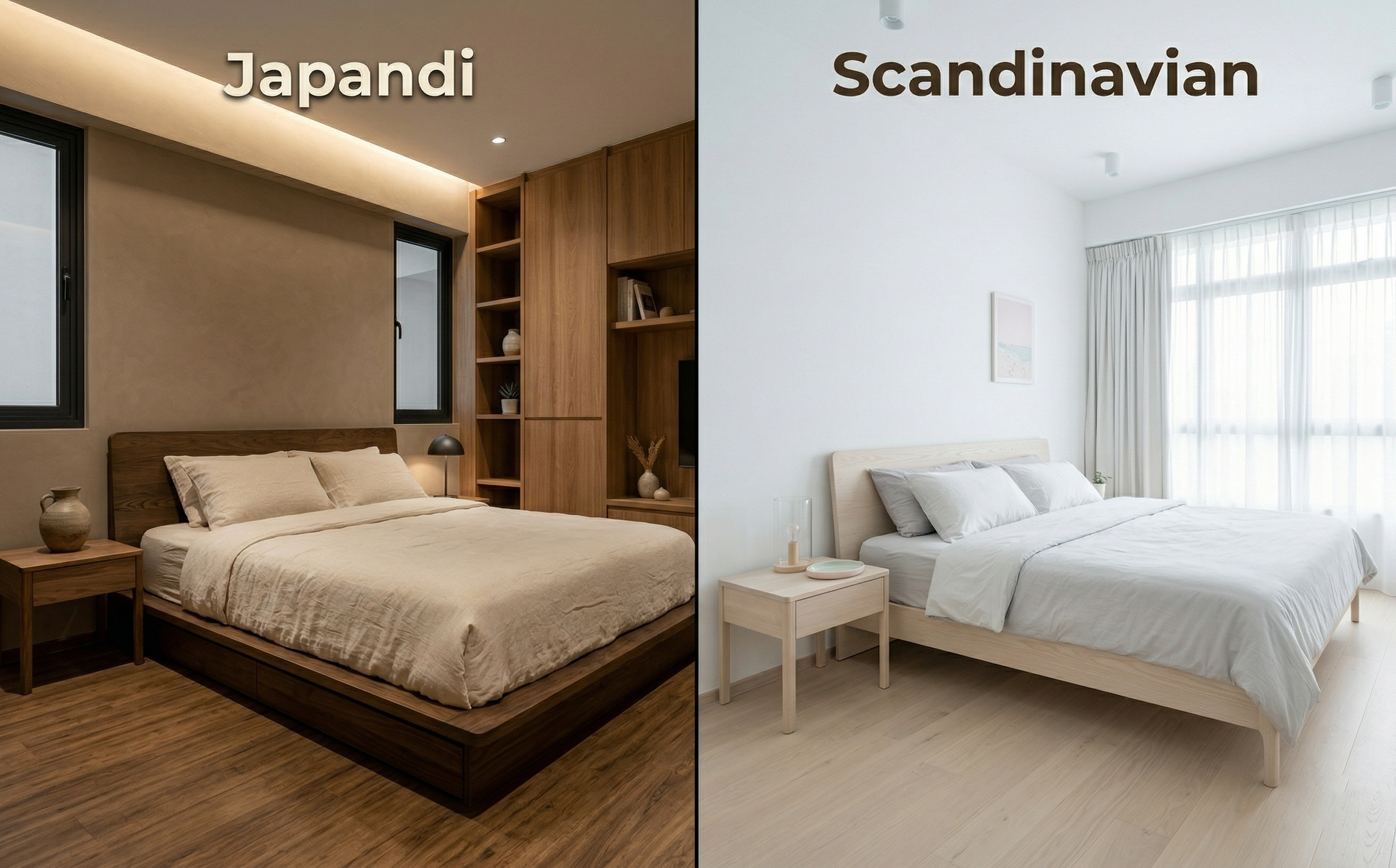
Split-screen showing Japandi (warm, earthy) vs. Scandinavian (cool, bright) side-by-side
Why Japandi Works Beautifully for Singapore Homes
Here's where it gets particularly relevant for anyone planning a BTO renovation, HDB resale renovation, or condo interior design project in Singapore. Japandi isn't just aesthetically gorgeous — it's remarkably well-suited to the specific realities of Singapore home living.
It's Made for Smaller Spaces
Japandi's emphasis on space maximisation, clutter-free living, and multifunctional furniture is practically a survival guide for HDB flat living. The low-profile furniture, hidden storage, and deliberate use of negative space make rooms feel significantly larger than they actually are. Your 4-room BTO can feel like a proper sanctuary rather than a jigsaw puzzle of IKEA boxes.
It Creates a True Retreat
The earthy, muted palette and natural light focus of Japandi interior design create a genuinely serene home environment — a counter to the fast-paced urban lifestyle that defines Singapore. Coming home to a Japandi space feels like genuinely leaving the city behind, even if you're on the 18th floor of an HDB block.
It's Built to Last
Unlike trend-driven design styles that date quickly (we all remember the chevron tile phase), Japandi is built on enduring principles. A Japandi HDB renovation or condo renovation undertaken today will look just as considered and beautiful in ten years. No embarrassing before-and-after photos for the wrong reasons.
It's Growing Rapidly in Singapore
Japandi renovations across Singapore — including BTO projects, HDB resale flats, and condominiums — are increasingly popular. Common hallmarks you'll spot in local projects include warm wood and earth-tone colour schemes, clean layouts without bulky false ceilings, and a shift away from heavy carpentry in favour of lighter, more intentional furniture selections.
Popular Japandi interior design in Singapore often features: warm timber-look vinyl flooring, earth-tone wall paints, built-in storage that disappears into the walls, and a single statement plant. Simple. Deliberate. Genuinely stunning.
Quick Tips to Achieve the Japandi Look
Ready to bring Japandi into your Singapore home? You don't need to rip everything out and start from scratch (though if you're planning a full HDB or condo renovation, even better). Here are six practical tips to get you started.
Quick Tip What To Do Clear Surfaces Invest in hidden or built-in storage to keep every surface clutter-free Wood Palette Choose light to medium natural wood for flooring, cabinetry, and furniture Layer Textures Linen cushions + jute rug + ceramic vase — add depth without adding clutter Black Accents Use sparingly on drawer handles, lamp bases, and frames to ground the space Greenery One sculptural plant or a few small succulents; low-maintenance and impactful Matte Finishes Opt for matte over gloss across furniture, paint, and fixtures throughout
Start small if needed. A linen cushion here, a ceramic vase there, swapping out a glossy laminate for a wood-grain finish. Japandi doesn't demand perfection — it demands intention. And that you can start practicing today.
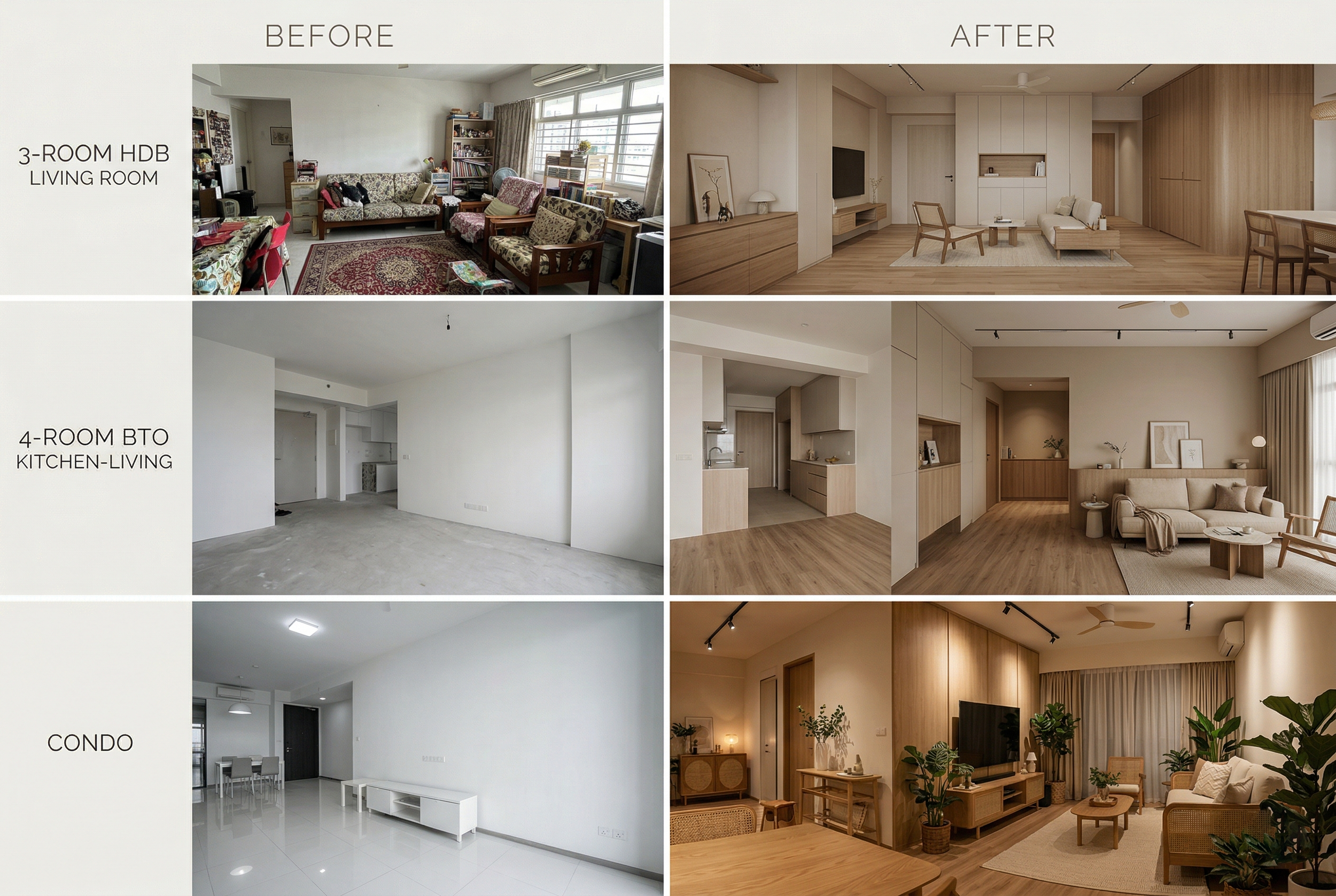
3 property transformations (3-room HDB, 4-room BTO, condo) showing before/after of Japandi renovations
Is Japandi the Right Style for Your Singapore Home?
If you want a home that feels calm without feeling clinical, beautiful without being fussy, and genuinely designed to make your everyday life better — yes. Japandi might just be exactly what your Singapore home needs.
It works across property types: a 3-room HDB BTO, a 5-room resale flat, a studio condo, or even a landed property. The scale changes; the principles don't. And in a city where the pace of life rarely lets up, having a home that feels like a genuine retreat is worth every considered design decision.
Whether you're just beginning to explore interior design styles for your upcoming renovation, or you've been quietly pinning Japandi bedrooms for the last six months hoping nobody noticed — we see you. And we're here to help bring that vision to life.
Planning a Japandi renovation for your HDB flat, BTO, or condo in Singapore? Our interior design consultancy specialises in creating calm, purposeful spaces tailored to Singapore homeowners. Get in touch for a consultation — no pressure, just good design conversations.
Related Topics: Interior Design Singapore | HDB Interior Design | BTO Renovation Design Ideas | Condo Interior Design Singapore | HDB Renovation Design | Interior Design Services Singapore
