
The Hidden Costs Nobody Talks About: Why Your Renovation Budget Keeps Climbing
You've seen the project. You've dreamed about it. You've even picked out the tiles and the paint colour. But somewhere between that mood board and the contractor's quote, the budget feels... off.
You're not alone. Most Singapore homeowners budget for the renovation work—the hacking, tiling, carpentry—then wonder why the final bill looks nothing like their estimates. The truth? They're forgetting about everything else.
Here's what typically gets left out: furniture for the newly designed spaces, appliances, post-renovation cleaning, window treatments, lighting fixtures, and that crucial buffer for the unexpected. By the time you realize what's missing, the number has bloated by 20%, 30%, sometimes more.
This is where most people go wrong—and where TBC Design Studio's Renovation Budget Calculator steps in to save you from sticker shock.

Completed renovation project showing furniture, lighting, and finished space
The "All-In" Problem (And Why It Matters)
When we meet clients for the first time, their renovation budget usually covers one thing: the construction work. Hacking, tiling, carpentry, electrical, plumbing. That's it.
But here's what a complete renovation budget actually looks like:
Renovation work: Hacking, flooring, carpentry, electrical, plumbing
Furniture: Sofas, beds, dining sets for your newly designed spaces
Appliances: Fridge, washer, oven, or any integrated units you're upgrading
Fixtures: Lighting, bathroom fittings, hardware
Window treatments: Curtains, blinds, roller screens (especially important in Singapore's tropical climate)
Post-renovation cleaning: Professional deep cleaning after all the dust settles
Contingency buffer: The 10–15% safety net for scope changes, material delays, or unexpected issues
Forget just one of these categories, and your "final budget" can shift by thousands.
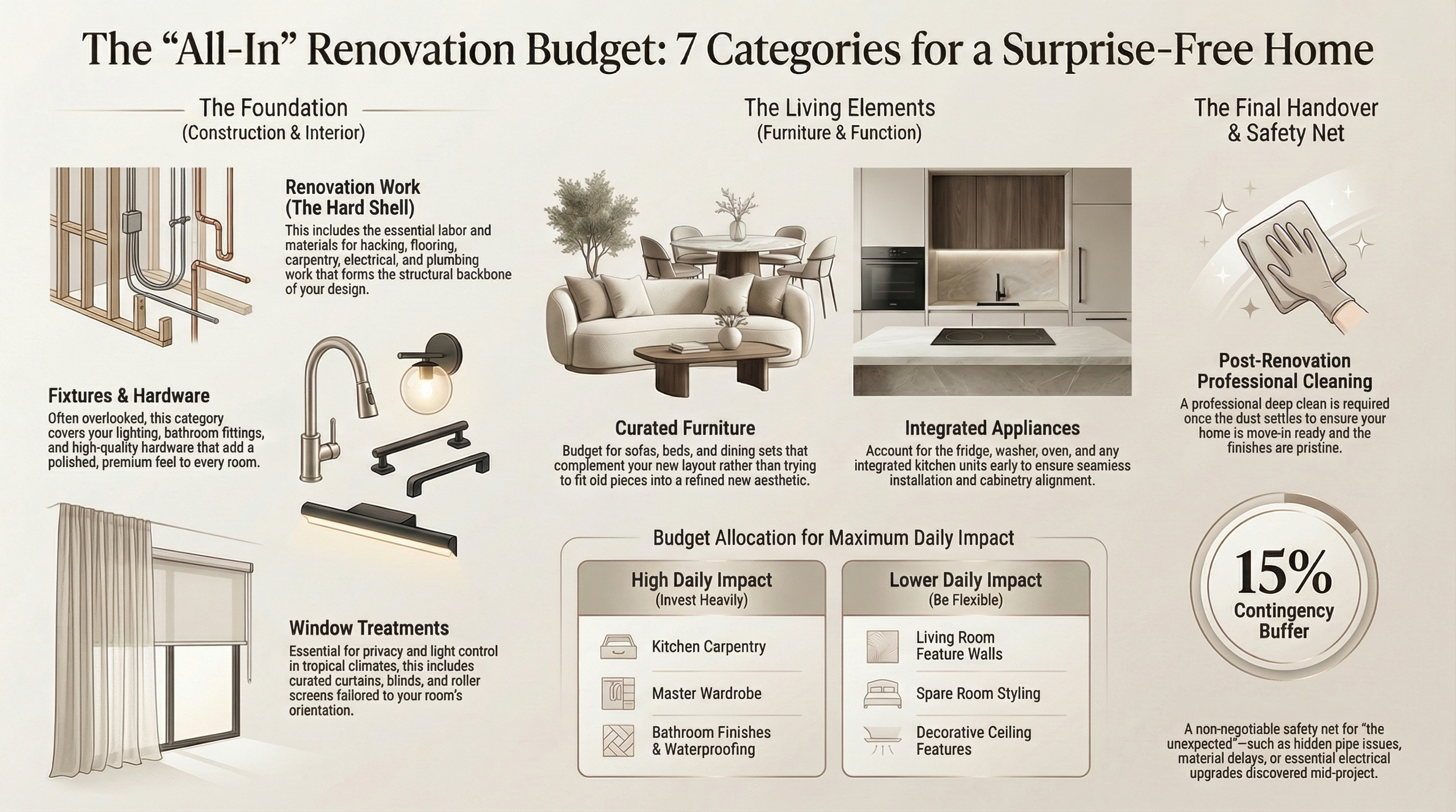
7 categories you should consider in your renovation budget
That's precisely why the calculator's "All-In" Budget Builder changes the game. Instead of budgeting in isolation, you input estimates across every category that actually matters—and it calculates your true total, including a mandatory 15% contingency fund. No surprises at the end. No scrambling for extra cash.
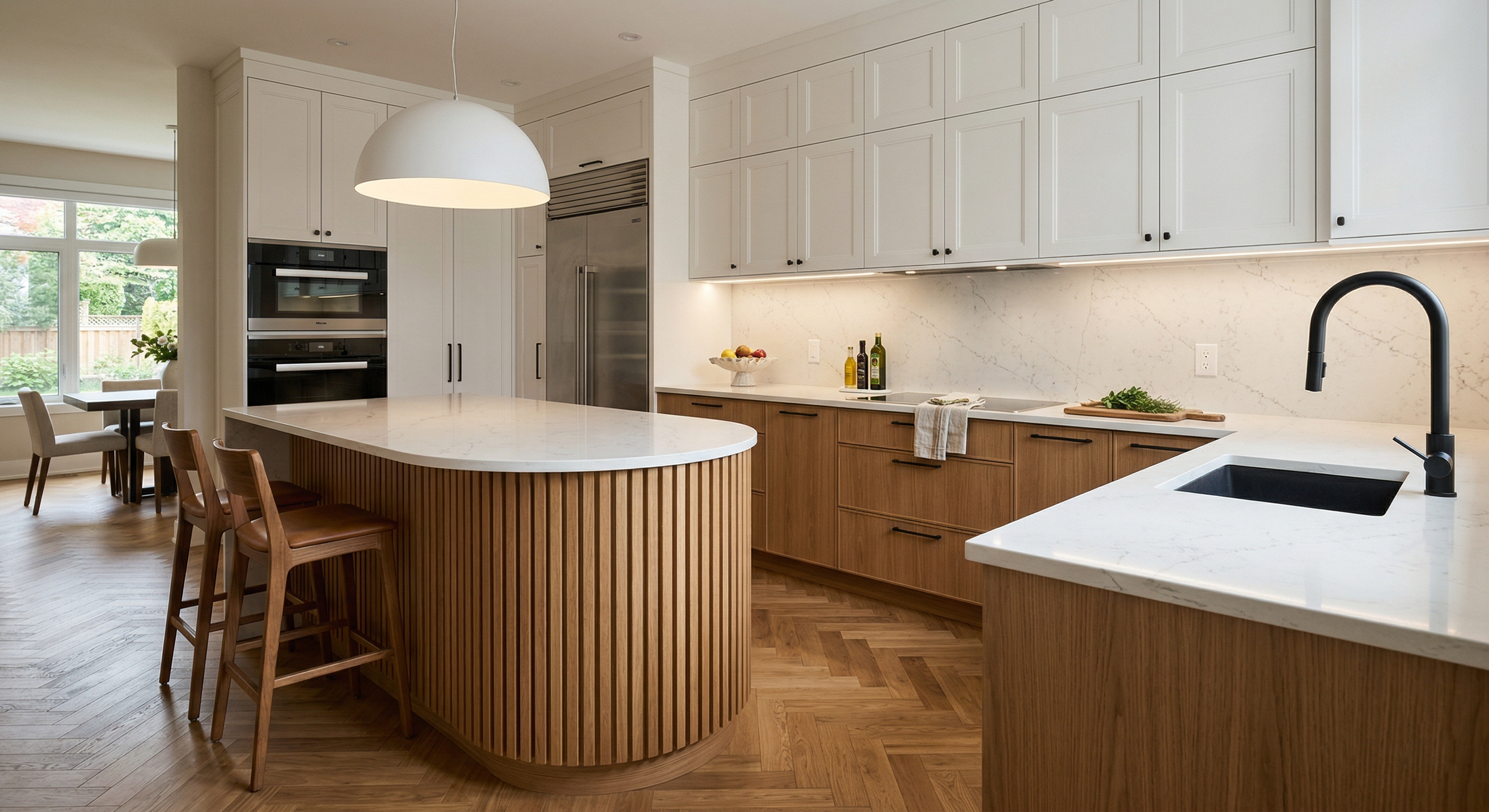
Kitchen or bathroom project showing custom carpentry, finishes, and fixtures—visual example of "everything that costs money"
Ready to See Your Real Number?
Realistic Renovation Planner
Stop guessing. Start planning. Use this interactive tool to lock in your scope, compare the market, and manage your "all-in" budget.
The "All-In" Budget Builder
Most homeowners only budget for the renovation work, forgetting everything else required to actually move in. Enter your estimates below to calculate your true total, including the mandatory contingency fund.
Compare the Market
Don't just look for the cheapest option. Enter three quotes below to spot suspicious outliers (unjustifiably high or suspiciously low).
Prioritize Your Spending
Invest your money where you spend your time. Allocate a larger portion of the budget to daily-use areas and cut spending on low-impact features.
Lock In & Own Your Budget
Lock In Your Scope
- Define exactly what you want done before starting conversations with professionals.
- Finalize the scope of work completely before signing any contracts.
Own Your Budget
- Communicate your budget clearly and confidently to prospective IDs or contractors.
- Evaluate their reaction: Ensure they respect your budget and don't make you feel embarrassed. If they do, find someone else!
Ready to bring this vision to life?
Book Your Free Design ConsultationTry the Renovation Budget Calculator — Input your estimates across renovations, furniture, appliances, and fixtures. Get your true total in minutes.
Don't Just Take the Cheapest Quote
We've heard the stories: three quotes come in. One's suspiciously low. One's bang-on. One's clearly inflated. Homeowners pick the cheapest, assume they've scored a deal, then the work starts and quality becomes an issue—or scope creeps upward.
The problem? Without context, a $35,000 quote could be brilliant value or a red flag.
Our calculator's "Compare the Market" feature lets you plug in three quotes and instantly see where they sit relative to industry medians. Are they significantly below average? That might indicate corners being cut. Unjustifiably high? You're potentially overpaying for brand name rather than quality.
It's not about chasing the lowest price—it's about spotting the outliers and understanding what they mean. A good ID or contractor should respect your budget and explain their pricing clearly. If they don't, that's valuable intel too.
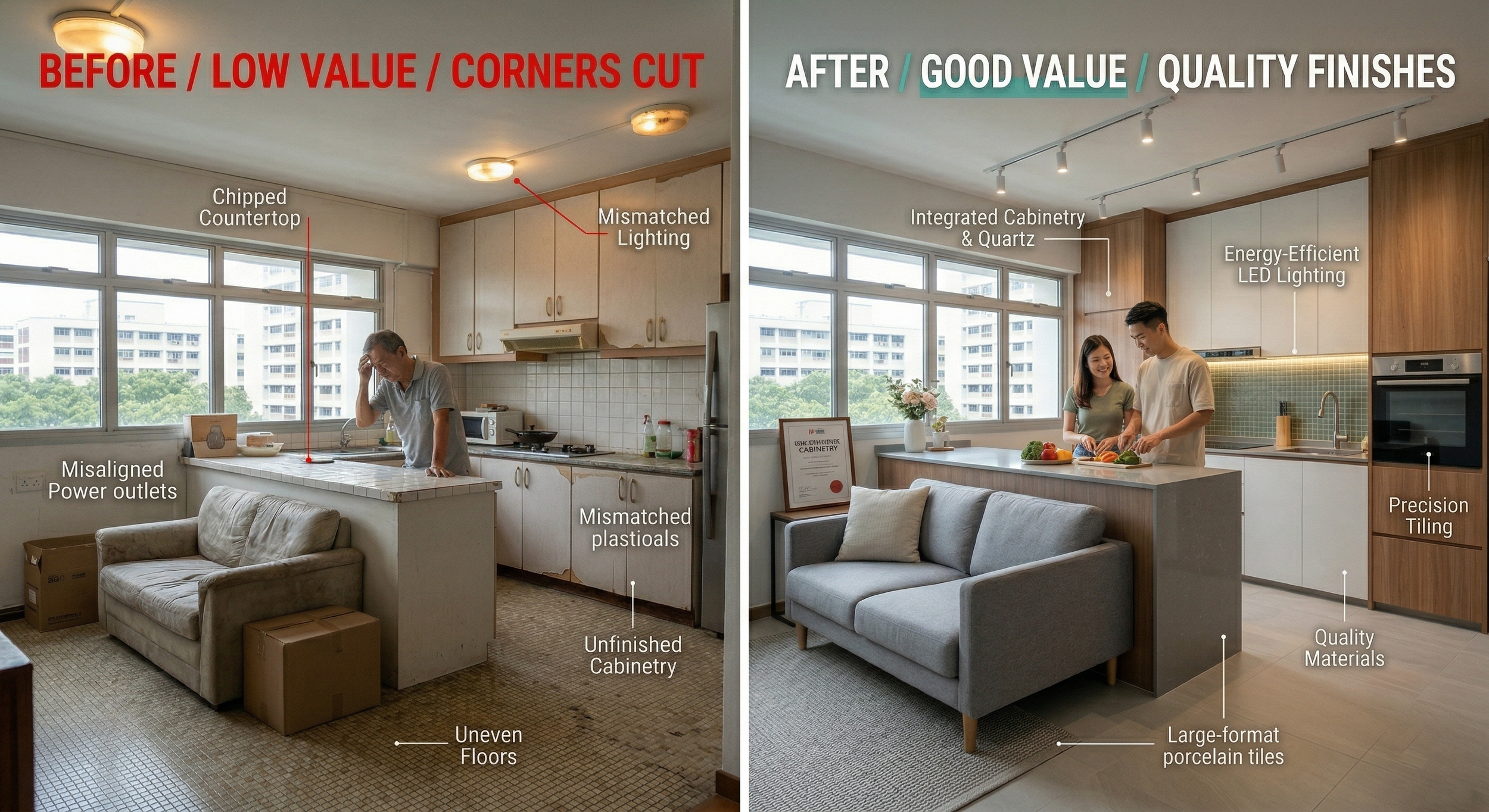
Before-and-after of a resale HDB or condo renovation showing quality finishes (tiling, cabinetry, lighting)—demonstrates "good value" vs. corners cut
The Daily Impact Score: Where Should Your Money Actually Go?
Here's a truth that surprises most homeowners: Not all renovation investments have equal impact on daily living.
A beautiful feature wall in the spare bedroom might look stunning in photos. But if you're choosing between that and upgrading your kitchen carpentry, master wardrobe, and bathroom finishes, you're making a trade-off you might regret after six months of daily use.
This is where "Prioritize Your Spending" comes in. The calculator maps out which areas deliver the most daily impact—and which are nice-to-haves you can postpone or scale back.
The pattern we see across most homes? Invest heavily in:
Kitchen carpentry (you use it multiple times daily)
Master wardrobe (every morning routine)
Bathroom finishes (daily necessity, waterproofing matters)
Be flexible on:
Living room feature walls (can be added later)
Spare room styling (lower daily impact)
Decorative ceiling features (nice but not essential)
By allocating your budget strategically, you prioritize comfort and functionality—the things that actually improve how you live—rather than design elements that photograph well but don't move the needle on your everyday experience.
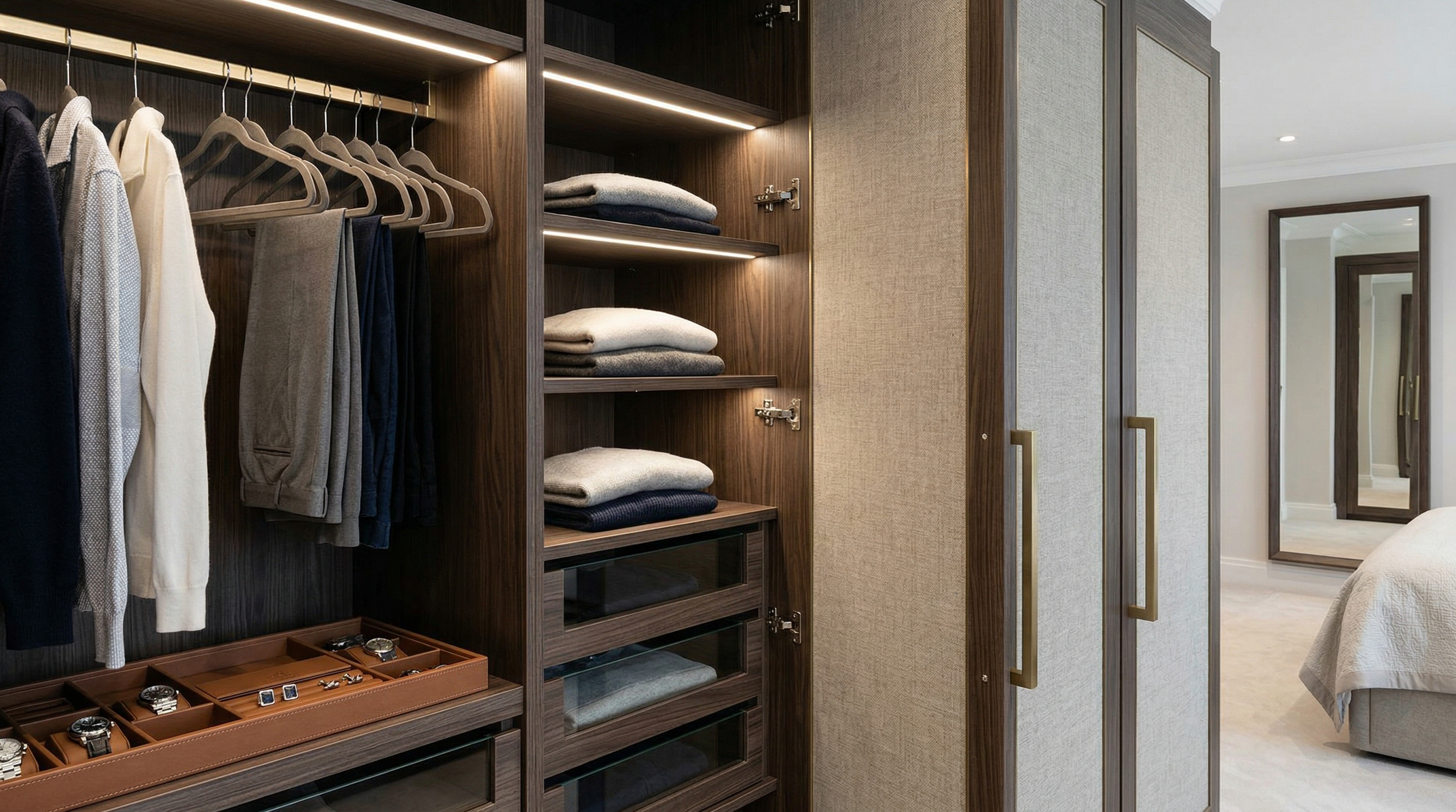
Master bedroom wardrobe or kitchen carpentry detail—shows the "high daily impact" elements worth investing in
Lock In Your Scope Before Costs Spiral
We've seen it happen dozens of times: a client finalizes costs, the contractor starts, and mid-project decisions creep in. "Oh, while we're at it, let's upgrade the tiles." "Actually, can we extend the wardrobe?" "What if we added a feature wall?"
Each change costs money. Together, they can blow the budget by 15–30%.
The calculator's "Lock In Your Scope" feature forces clarity before any contracts are signed. You define exactly what's included—every fixture, finish, and labour item—then communicate this confidently to your ID or contractor. No ambiguity. No scope creep.
This is where TBC's philosophy shines: transparency from day one. A good designer should work with your numbers, not against them. If they make you feel embarrassed about your budget or pressure you to overspend, that's a sign to walk.
When you own your budget—and you communicate it clearly—you're empowered to make trade-offs thoughtfully rather than reactively. You can say "yes" to what matters and "no" (or "later") to what doesn't, without guilt.
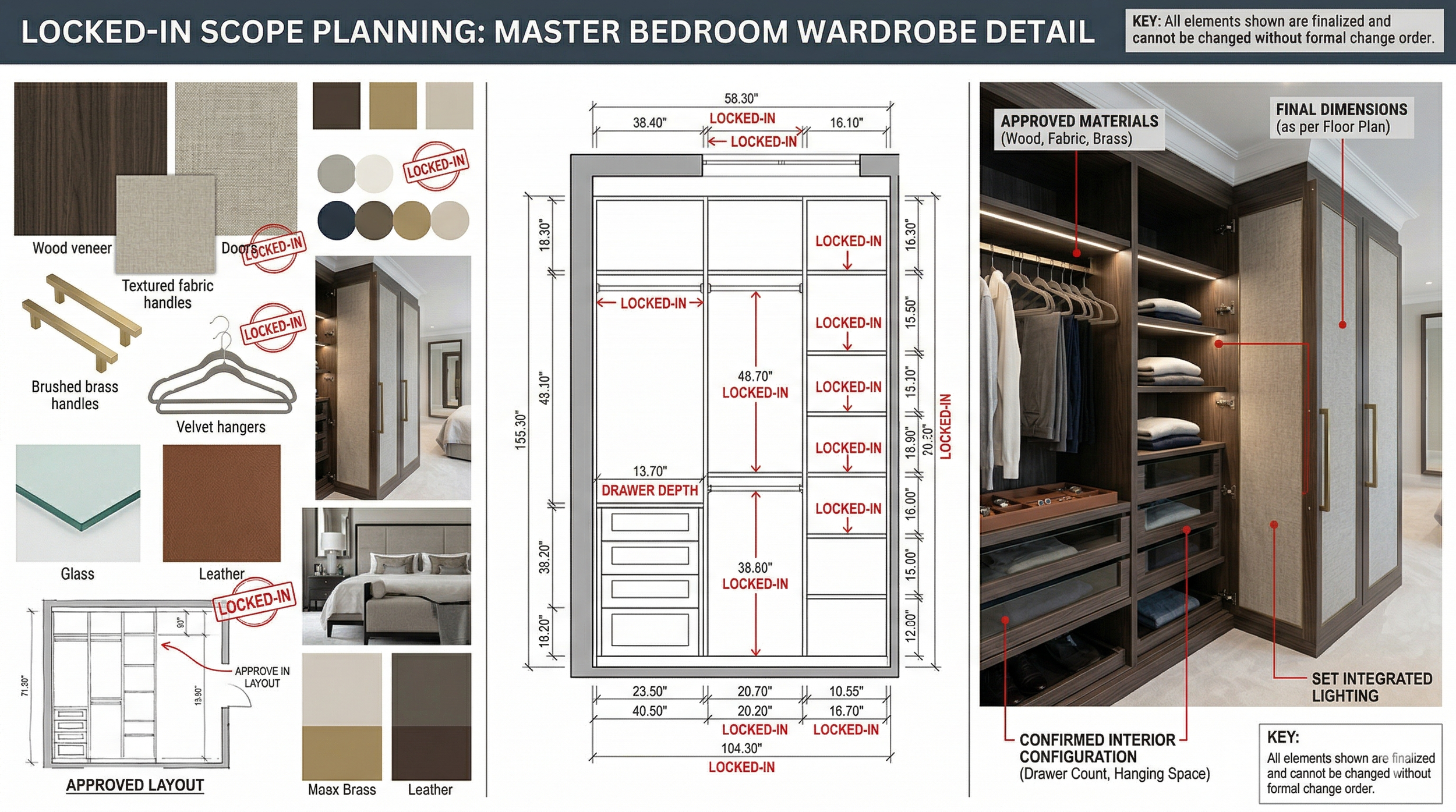
Design mood board, floor plan, or 3D render—shows "locked-in scope" planning
Why the Contingency Buffer Isn't Negotiable
That 15% contingency the calculator automatically includes? It's not a suggestion. It's a necessity.
In renovations, the unexpected is guaranteed. A pipe behind the wall needs replacing. The tiles you loved are on back-order. Your contractor discovers mold in the service yard that needs remediation. Electrical codes require an upgrade you didn't budget for.
Without a buffer, these small issues become financial crises. With one, they're manageable hiccups.
We've worked on projects where the 15% buffer was never touched—and others where it made the difference between a smooth handover and a stressful scramble. Either way, having it protects your peace of mind and your timeline.
From Calculator to Clarity: What Comes Next
The renovation budget calculator is designed to do one thing really well: show you what a complete, realistic renovation actually costs for your space and your priorities.
But a number on a screen—even a detailed one—is just the starting point.
The real magic happens when you take that clarity into conversations with interior designers or contractors. You arrive with realistic expectations. You're not shocked by their quote because you understand what a full renovation budget looks like. You can ask informed questions. You can make confident trade-offs.
That's when a budget becomes a plan—and a plan becomes a home you actually love living in.
Your Next Step: Budget + Confidence
Step 1: Calculate your real budget
Open the Renovation Budget Calculator — Input every line item. See your true total. Understand where money actually goes.
Step 2: Talk to someone who respects that number
Book a free design consultation with TBC — We'll review your budget, discuss your priorities, and show you what considered luxury looks like within your reality.
Receive a complimentary renovation budget planning guide when you book. We'll follow up within 1–2 business days.
Because your dream space shouldn't come with surprise costs. It should come with confidence, clarity, and the kind of refined interiors that feel genuinely yours.
